
Will Towed Transplanting Machine Work Well On Uneven Or Sloped Farmland?
Many vegetable and crop growers with hilly, rolling fields hesitate to invest in tractor-drawn planting gear. They wonder whether a towed transplanting machine can keep stable planting depth and straight seedling placement on bumpy ground or sloped land.
How a towed transplanting machine adapts to uneven ground?
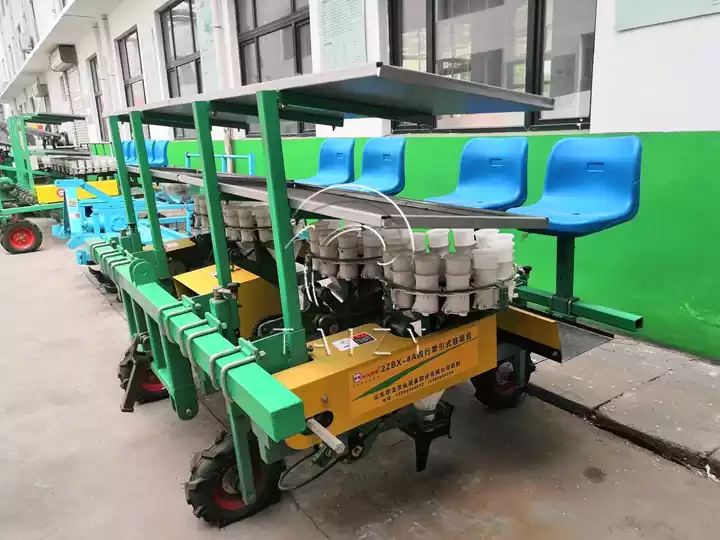
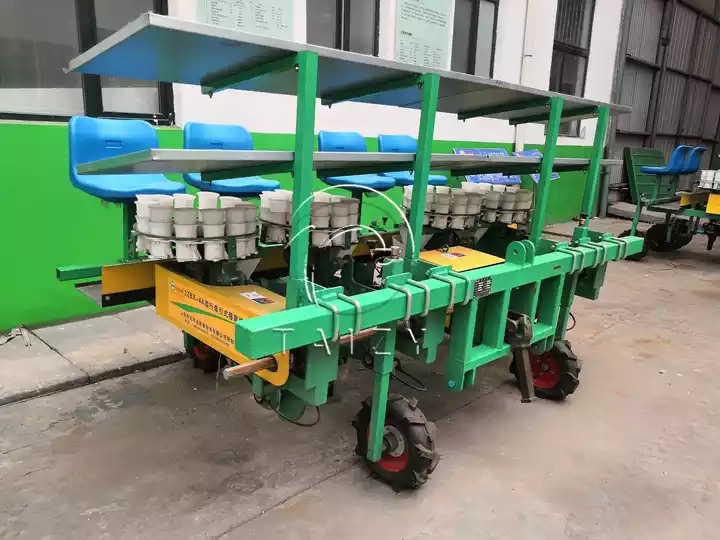
A well-designed towed transplanting machine relies on profiling gauge wheels and floating planting units. These parts follow the land contour independently instead of locking rigidly to the tractor frame.
When the ground rises or dips, the floating assembly moves up and down to hold consistent transplanting depth, so seedlings will not be buried too deep or left sitting on the soil surface.
Where it works, and where it struggles?
Suitable conditions:
- Gentle slopes below 10–12 degrees
- Minor bumps, small ridges and lightly undulating farmland
- Well-tilled soil without large rocks or deep ruts
- Prepared vegetable fields for tomato, cabbage, pepper and tobacco seedlings
Conditions with poor performance:
- Steep slopes over 15 degrees
- Rocky, rough ground with frequent big obstacles
- Slippery wet soil that causes tractor side sliding
- Fields with deep, unfilled furrows and sharp terrain changes
On these difficult sites, even a well-adjusted towed transplanting machine will have unstable planting depth and higher seedling loss.
Practical adjustments for sloped fields
You can greatly improve planting results with these simple settings and habits:
- Slow down tractor speed, avoid fast travel across slopes
- Set up gauge wheels properly to activate the floating profiling function
- Reduce the working row count for better stability on hillsides
- Plant along contour lines instead of going straight up and down the slope
- Remove large stones and fill deep ruts before transplanting work starts
- Check planting depth every few rows and recalibrate if needed
Towed transplanter vs self-propelled transplanter on slopes
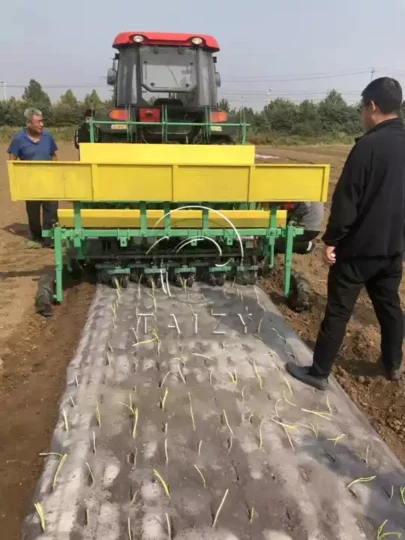
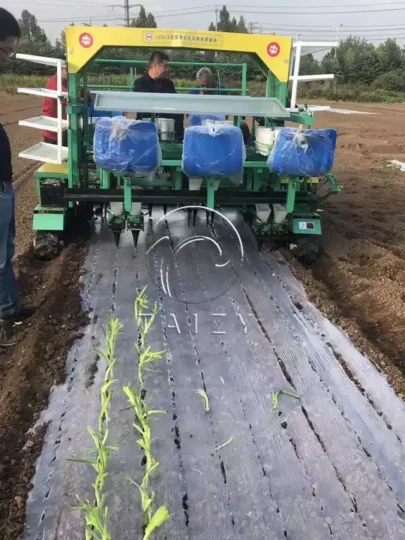
For gentle hills, the towed transplanting machine is usually cheaper and easier to scale for multi-row planting. It also saves your budget compared to buying self-propelled equipment, and it can be shared between multiple farm plots with different tractors.
For very steep terraces, crawler self-propelled transplanters tend to hold stability better. They have lower center of gravity and stronger grip. If most of your land is under 12 degrees of slope, the towed option remains a cost-effective pick.
Final verdict
A towed transplanting machine works reliably on gently uneven and moderately sloped farmland if fitted with floating profiling units. It cannot handle extremely steep, rocky fields, but it is a practical low-cost option for most rolling vegetable farms.
Before purchase, measure the maximum slope angle of your fields and confirm the machine comes with independent floating planting units. This small check will save you from unexpected planting failures in the field.
If you want to compare different transplanter types for special terrain, read our other guide about transplanter selection for hilly farms.